

PLC Service Work
Fast, practical PLC support to keep production moving
When a PLC-controlled process stops, downtime hits immediately, production slows, teams scramble, and faults can be difficult to isolate under pressure. PLC service work isn’t just “checking the program.” Many breakdowns are caused by field devices, control wiring, power stability, or I/O faults that need structured troubleshooting and safe electrical repair.
We provide PLC Service Work for industrial sites, supporting fault finding, control wiring repairs, and verification so your systems return to stable operation quickly and safely.
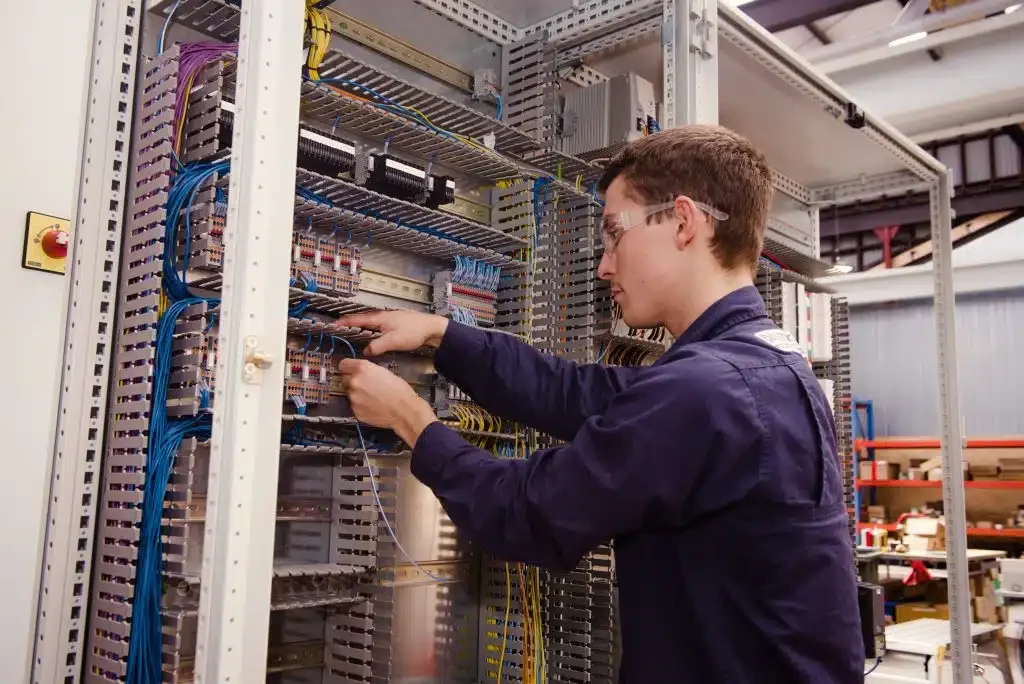

What we do
PLC service work is site-dependent and tailored to your equipment and operational requirements. Typical support includes:
Breakdown fault finding and troubleshooting
Rapid assessment of the fault condition and process impact
I/O verification and signal path checks (input and output states)
Identification of common failure points (sensors, actuators, interlocks, comms, power)
Isolation of intermittent faults and nuisance trips affecting control systems
Control wiring and electrical remediation
Repairs to damaged or degraded control wiring
Termination rework, cabinet tidying, and wiring corrections
Replacement of faulty devices (relays, contactors, power supplies, sensors, indicators)
Circuit protection checks and improvements where required
Field device checks
Sensor diagnostics and verification (site dependent)
Actuator and control device verification (valves, motors, starters, solenoids)
Continuity testing, insulation checks, and signal integrity verification
Testing, validation and recommissioning support
Functional testing following repairs
Verification that safety circuits and interlocks operate correctly
Support during restart and production ramp-up
Documentation of findings and corrective actions (scope dependent)
Preventative reliability improvements (optional)
Identifying recurring failure patterns
Recommendations to improve stability and serviceability
Planned checks for critical lines or high-downtime assets
Where PLC service work adds the most value
Unplanned breakdowns affecting production lines
Recurring faults that never seem to “stay fixed”
Intermittent sensor or wiring issues are causing stop-start operation
Cabinet issues such as loose terminations, overheating, or unstable supplies
Plant upgrades requiring clean control wiring and verification testing
How we work
Stabilise and assess the fault safely
Diagnose methodically (I/O, wiring, devices, power, comms)
Repair and remediate with compliant electrical practices
Test and validate operation under real process conditions
Provide clear findings and improvement recommendations where helpful
We focus on solving the root cause, not just resetting alarms and walking away.
FAQ
Do you fix PLC programs or only electrical faults?
We can assist with PLC-related service work focused on fault finding, I/O verification, field devices, and control wiring. Software/program changes are site-dependent and typically handled in coordination with your controls engineer or OEM where required.
What’s the most common cause of PLC breakdowns?
Often it’s not the PLC itself — it’s sensors, actuators, loose terminations, power supply issues, failed relays/contactors, or wiring faults. Structured troubleshooting finds the real cause quickly.
Can you support urgent breakdowns to reduce downtime?
Yes. We prioritise safety first, then work to isolate and repair the fault efficiently to get production back online.
Can you help with intermittent faults that come and go?
Yes. Intermittent issues are common in industrial environments. We test signal paths, terminations, power stability, and device behaviour to identify the underlying issue.
Do you provide documentation of what was found and fixed?
Yes, where requested. Clear notes and records help prevent repeat faults and support future servicing.
Can you carry out preventative checks to avoid future failures?
Yes. We can implement planned inspections for critical panels, terminations, and high-failure devices to reduce unplanned downtime.
What information helps you respond faster?Site contact details, a brief description of the fault and symptoms, affected equipment, and any recent changes. If available, drawings, panel photos, and alarm/fault logs also help.